
Content

DeafBlind Ontario Services believes that research initiatives will gather evidence, advance knowledge and enhance the quality of life for individuals who are deafblind, as well as those living with a developmental disability who are Deaf, hard of hearing or use non-traditional forms of communication, leading to more opportunities and choices.

Why Research Matters

Research leads to better lives for the people we support and stronger, more effective person-centred support services. It ensures that our services evolve based on evidence. It builds credibility, drives innovation, and ensures that our practices are informed by evidence and by the voices of the individuals and communities we serve.
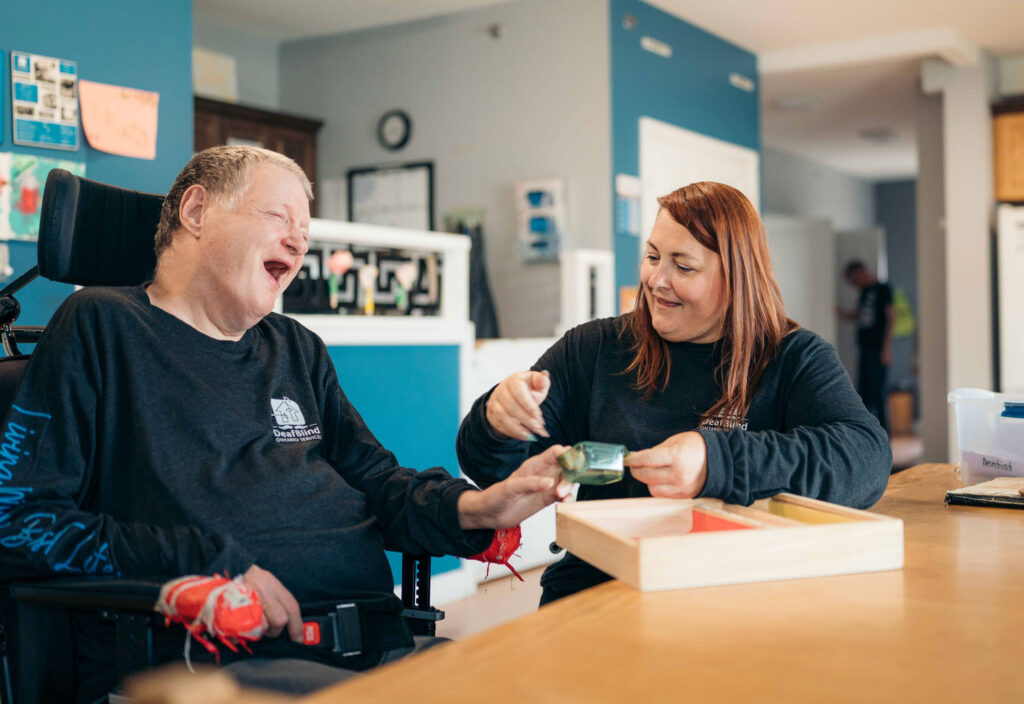
Impact on the People we Support

  • Enhances Quality of Life

    Research identifies effective strategies that improve communication, autonomy, safety, and daily living. Evidence-based approaches reduce guesswork and lead to more meaningful engagement.

  • Promotes Personalized Support

    Through data and lived-experience input, research highlights the diverse needs of individuals. This ensures supports are tailored, respectful, and aligned with each person’s unique communication style, identity, and goals.

  • Increases Inclusion, Dignity & Self-Advocacy

    Participatory research elevates the voices of people supported and empowers them to shape their services. This builds trust, strengthens relationships, and supports greater independence and choice.

Impact on the Services we Provide

  • Enhances Service Quality & Consistency

    Research defines the skills and practices that lead to positive outcomes. This supports the creation of standards and competency frameworks, ensuring consistent, high‑quality care.

  • Supports Funding, Sustainability & Innovation

    Evidence strengthens funding proposals and demonstrates the value of programs. Research helps organizations identify what works, allocate resources strategically, and justify new initiatives.

  • Informs Policy & Best Practices

    Research guides organizational policies and ensures alignment with current standards. It informs sector-wide guidelines and quality benchmarks.

  • Strengthens Employee Training & Professional Development

    Findings highlight training gaps and drive development of targeted, effective learning programs. This enhances employee confidence, retention, and expertise.

  • Accelerates Innovation & Problem Solving

    Research encourages us to explore creative solutions, adopt new technologies, and continuously improve programs based on real-world data.

Research Goals

  • Quantify the prevalence

    By using customized data from Canadian Survey on Disability every five years.

  • Networking & Partnerships

    With universities/colleges for academic research; community partners, and other national and international research networks for collective contributions to reports, best practices and publications.

  • Facilitating participation

    To capture lived experience and unique perspectives of people we support.

  • Share expertise

    By co-designing research initiatives and contributing to the academic knowledge base.

Prevalence of people who are deafblind

Based on the Canadian Survey on Disability 2022

  • Over 2% of Canada’s population aged 15 years and over are deafblind (602,160 people)

  • Of the Canadians aged 15 years and over who are deafblind, 52% of them are aged 65 years and over (314,260 people)

  • Over 2% of Ontario’s population aged 15 years and over are deafblind (246,370 people)

  • Of the Ontarians aged 15 years and over who are deafblind, 49% of them are aged 65 years and over (120,800 people)

Prevalence of people with a developmental disability and those who are Deaf, hard of hearing, or use non-traditional forms of communication

Based on the Canadian Survey on Disability 2022

  • 1.5% of Canadians (456,630 people) aged 15 years and over have a developmental disability.

  • People living with a developmental disability who are Deaf, hard of hearing or use nontraditional forms of communication represent 0.2% of the Canadian population as well as the Ontario population.

Content

DeafBlind Ontario Services will participate in research by:

  1. Providing leadership for research, advocacy and solutions to improve the quality of life for Canadians with deafblindness.
  2. Fostering academic/community collaborations nationally/internationally to encourage the work researchers and involvement of individuals with deafblindness and dual sensory loss.
  3. Securing resources for research.
  4. Facilitating knowledge exchange to stay current and serve as a central source of research on the experiences of people with deafblindness—ensuring stakeholders are informed and empowered.

Related Resources